AM Connect: International Conference on Research and Industrial Advances in Additive Manufacturing

Overview

Duration:
2 days
Language:
English
Goal:
Share knowledge and expertise in additive manufacturing across borders, create networking opportunities between industry and research institutions
Target group:
Industry professionals and researchers working in additive manufacturing
Contact:
Sandra Schulnig: s.schulnig@cuas.at, +435905002156

About the conference

Join us at AM Connect, the cross-border Additive Manufacturing event of the year, happening on 3 and 4 December 2025 at Carinthia University of Applied Sciences in Villach, Austria. This two-day conference brings together industry leaders, researchers, and innovators from Austria and Slovenia to explore the frontiers of AM technology. Discover the latest trends, connect with peers, and be part of shaping the future of manufacturing. AM Connect aims to bring together industry professionals and researchers from Slovenia and Austria working in the field of Additive Manufacturing (AM). The conference will facilitate knowledge sharing, networking, and community building while exploring emerging technologies, key trends, real-world challenges, and cross-sector opportunities.  The conference is organized as part of the ADDCIRCLES project, funded by the INTERREG SI-AT program, which promotes cross-border collaboration in additive manufacturing between Slovenia and Austria. 

Main goals

Share knowledge and expertise in additive manufacturing across borders
Create networking opportunities between industry and research institutions

Strengthen Slovenia-Austria AM community

Explore current developments and future trends in AM

Highlight innovative AM projects and solutions

Provide exhibition opportunities for industry stakeholders

Conference topics

  • Industrial-Scale Additive Manufacturing – From Prototyping to Production
  • AM for High-Impact Applications
  • Smart Additive Manufacturing – AI, Process Monitoring & Digital Twins
  • Process Innovations in Additive Manufacturing
  • Advanced Materials for Next-Generation Additive Manufacturing
  • Performance & Performance Enhancement in Additive Manufacturing
  • European and National AM Projects and Initiatives

Timeplan

The first day (3 December 2025) will feature plenary speakers and industry-focused sessions, highlighting practical applications of additive manufacturing. The program includes keynote presentations from AM Austria and industrial experts as well as remarks from the government & regional authorities followed by single-track sessions covering the following topics: 

  • Industrial-Scale Additive Manufacturing – From Prototyping to Production (Overcoming Scalability Challenges in AM, Automation & Robotics in Additive Manufacturing, Quality Assurance & Certification for Large-Scale AM) 
  • AM for High-Impact Applications (AM for Aerospace & Automotive: Lightweight & High-Strength Structures, Additive Manufacturing for Medical Devices & Implants, Industrial Case Studies: AM for Critical Functional Parts) 
  • Smart Additive Manufacturing – AI, Process Monitoring & Digital Twins (AI & Machine Learning for Process Optimization, Digital Twins for Predictive Maintenance & AM Process Control, Real-Time Quality Monitoring & Defect Prediction) 

There will be also the possibility for exhibition of innovative AM solutions with short pitch presentations (3-5 min each). In the afternoon, participants can engage in pre-scheduled B2B meetings (10-min slots) while exploring the exhibition area showcasing the latest AM projects and technologies. The day concludes with a networking dinner to facilitate further discussions and collaboration opportunities. 

The second day (4 December 2025) will spotlight current research developments in the AM field, starting with invited experts giving keynote talks about Pioneering AM Research in Europe and peer-reviewed scientific contributions covering cutting-edge research in the following fields: 

  • Process Innovations in Additive Manufacturing (Multi-Axis & Hybrid Manufacturing Solutions, High-Resolution & Multi-Scale 3D Printing, Advances in Process Control & Defect Reduction) 
  • Advanced Materials for Next-Generation Additive Manufacturing (Smart & Functional Materials for AM, Bio-Based & Recycled Materials for Sustainable AM, Multi-Material Printing: Challenges and Innovations) 
  • Performance & Performance Enhancement in Additive Manufacturing (High-Performance Polymers and Composites for AM, Post-Processing Strategies for Enhanced Material Properties, Mechanical Performance of AM Components) 

In the afternoon, European and National AM Projects and Initiatives will be presented ending the conference with a roundtable on how to strengthen AM Research Networks and a Closing Session & Farewell Networking.  

Extended abstract or paper submission

The conference welcomes extended abstract and paper submissions for day 2 related to the conference topics. The dates for submission are: 

  • Prolonged to 7 September 2025: Extended abstract or paper submission!
  • 15 September 2025: Notification of the submission acceptance
  • 27 September 2025: Deadline for the submission of final contributions
  • 13 October 2025: Draft program of the conference
  • 30 October 2025: Final program
  • 3 and 4 December 2025: Conference

Contributions should be in English language. They will be evaluated on the basis of an extended abstract (2-3 pages incl. references) or a full conference paper (min. 6 pages incl. references). For accepted extended abstracts, long versions may be submitted. Please use the provided template for submission. The extended abstracts and conference papers will be made available to all participants electronically during the conference and published at “Phaidra” at Carinthia University of Applied Sciences in Villach.

Additional information

Exhibition

  • Exhibition opportunities available (up to 12)
  • Exhibitors will get 3-5 minute presentation slots
  • Focus on practical applications and real-world case studies
  • Emphasis on non-marketing, technical content
  • For more information please get in touch with Sandra Schulnig: s.schulnig@cuas.at, +435905002156

Scientific committee

  • Sandra Schulnig, CUAS
  • Mathias Brandstötter, CUAS
  • Janez Slapnik, FTPO
  • Dragan Kusić, TECOS
  • Surisetty Jyothsna, Wood K plus
  • Johannes Gartner, TU Delft
  • Clemens Holzer, Montanuniversitaet Leoben
  • Joamin Gonzalez-Gutierrez, Luxembourg Institute of Science and Technology
  • Igor Drstvenšek, University of Maribor

Organizing committee

  • Sandra Schulnig, CUAS
  • Mathias Brandstötter, CUAS
  • Zala Lorber, FTPO
  • Maja Mešl, FTPO
  • Simona Knežević Vernon, TECOS
  • Ram Dušić Hren, TECOS
  • Surisetty Jyothsna, Wood K plus
  • Agnes Parfy, AM Austria
  • Johannes Gartner, AM Austria
  • Branka Mušič, ZAG
  • Thomas Petschnig, GPS

Carinthia University of Applied Sciences

How to get there?

Bus lines from Villach main station to the Carinthia University of Applied Sciences, Villach Campus: line 3 or line 8 (line 8 also stops at Villach Seebach) – bus timetables attached.

Bus stop Carinthia University of Applied Sciences, Villach Campus = Villach Technologiepark

Motorway exit Wernberg, then on the B83 for about 2 km towards Villach, after the Villach city sign, the B83 passes under the A2 motorway, and then immediately turn right at the first exit towards Magdalensee. Follow the signs for Magdalensee. The road leads through a small forest, always follow the road, after an S-curve you will pass Magdalensee (on the left), continue straight ahead, cross the Südbahn and continue uphill directly to the centre of St. Magdalen. At the hilltop, turn right and follow the road downhill. The grounds of the technology park, the chimney of the heating plant and the technology park are visible to the south. Turn left onto the grounds of the technology park in the sharp right-hand bend.

Motorway exit Villach/Ossiacher See, then approx. 2 km towards Villach, on the right is the Gasthof Seehof, on the left is the Vassacher See, continue on the B33 to the left towards the east, Wernberg, Klagenfurt, continue on the B33, after approx. 4 km turn right towards Magdalensee. The road leads through a small forest, continue along the road, after an S-bend, pass Magdalensee (on the left) and continue straight ahead, cross the Südbahn and continue uphill directly to the centre of St. Magdalen. At the hilltop, turn right and follow the road downhill. The grounds of the technology park can already be seen to the south, along with the chimney of the heating plant. Turn left directly into the sharp right-hand bend onto the grounds of the technology park.

Accommodation

Speakers

Day 1 – 3 December 3 2025 – Industry & Innovation Focus
 

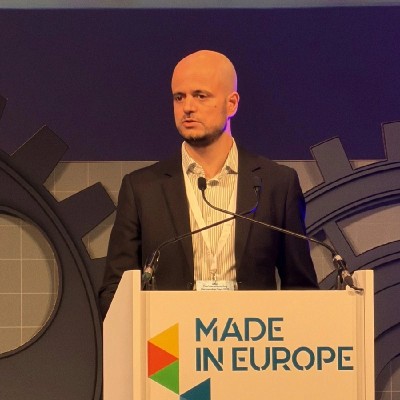
Johannes Gartner
Delft University of Technology

Keynote
Politics Meets Production: The Future of Additive Manufacturing in the EU 

Franz Haas
Graz University of Technology

What can boost competitiveness of Additive Manufacturing? New processes – New machines – New materials 

Thomas Grünberger
LKR Leichtmetallkompetenzzentrum Ranshofen

Inline process monitoring systems for additive manufacturing of metals – Added value for detection of flaws and predictive maintenance

Aydın Yağmur
EOS GmbH

Monitoring and closed-loop control of the DMLS process to improve the microstructure and mechanical properties

Florian Arbeiter
Montanuniversitaet Leoben

Prediction of the fatigue lifetime of components produced via endless fibre reinforced extrusion-based additive manufacturing

Fabrice Louis Michel Giuliani
CEO of Combustion Bay One e.U.

About additive manufacturing designs in the hot core of an aircraft engine

Igor Drstvenšek
University of Maribor

Innovation vs. Tradition: The Role of Additively Manufactured Metal Implants in Modern Medicine

Martin Schwentenwein
Lithoz GmbH

Additive Manufacturing of High-Performance Ceramic Materials

Alen Šapek
Additio d.o.o.

Scalability of Production Using Hybrid Additive Manufacturing and Injection Moulding for Low-Batch Applications

Johannes Braumann
University of Arts Linz

Parametric Design Meets Robotics in Custom Additive Manufacturing

Erik Päßler
CEAD B.V.

From Vision to Value: Large Format Additive Manufacturing


Day 2 – 4 December 3 2025 – Research, Projects & Initiatives
 

Serena Graziosi
Politecnico di Milano

Keynote
Advancing human health through design for additive manufacturing

Elisabeth Rossegger
Polymer Competence Center Leoben GmbH – PCCL

Dynamic Photopolymers: Paving the Way for Sustainable 3D Printing

Julian Bosch
EOS GmbH

Multi-Criteria Approach for Multi-Axis Printing in Additive Manufacturing

Sebastian Lämmermann
Johannes Kepler University Linz

Comparative Study of Additive Silicone Manufacturing Methods for Medical Devices

Monika Stipsitz
Silicon Austria Labs
GmbH

Towards full-field thermal monitoring during additive manufacturing process using simulation- & ML-based virtual sensing

Riccardo Casati
Politecnico di Milano

New advances on additive manufacturing of Al alloys for space applications

Doris Kapl
Wood K plus – Kompetenzzentrum Holz GmbH

functionalWOOD2print – Binder-jet 3D printing of tough biobased structural materials with functional surfaces

Benjamin Meier-Leeb
Carinthia University of Applied
Science

Sustainability in Additive Manufacturing – Influence of Powder Reuse on High Temperature Strength in L-PBF of Ti6Al4V

Jaka Vaupot
Slovenian National Building And Civil Engineering Institute

Mechanical Properties of Carbon and Natural Fibers – TPU Composites for Additive Manufacturing Applications

Janez Slapnik
Faculty of Polymer Technology

Unlocking new functionalities and improved properties in material extrusion additive manufacturing through dynamic covalent chemistry

Damir Godec
University of Zagreb

Design Optimisation for Additive Manufacturing

Carina Emminger
Johannes Kepler Universtiy Linz

Tuning Quasi-Zero Stiffness in Additively Manufactured Kresling Structures via Silicone Encapsulation and Infill Design

Arunjunai Raj Mahendran
Wood K plus – Kompetenzzentrum Holz GmbH

Tailor-Made Conductive Thermoplastic Filaments for Extrusion-Based FDM Printed Strain Sensing in Thermopset Composites

Snehashis Pal
University of Maribor

The effect of the number of thermal cycles on the mechanical properties of parts fabricated by laser powder bed fusion

Registration fees

NEWS: All conference fees will be co-financed by the European Union via the Interreg SI-AT project ADDCIRCLES. Online participation is not available.

Most Popular
Most Popular
Most Popular
Regular

260 € 0 €

Full Conference
2 Days

(1-day) Regular

170 € 0 €

Partial Conference Participation
1 Day

Student

160 € 0 €

Full Conference
2 Days

(1-day) Student

110 € 0 €

Partial Conference Participation
1 Day

keyboard_arrow_up